
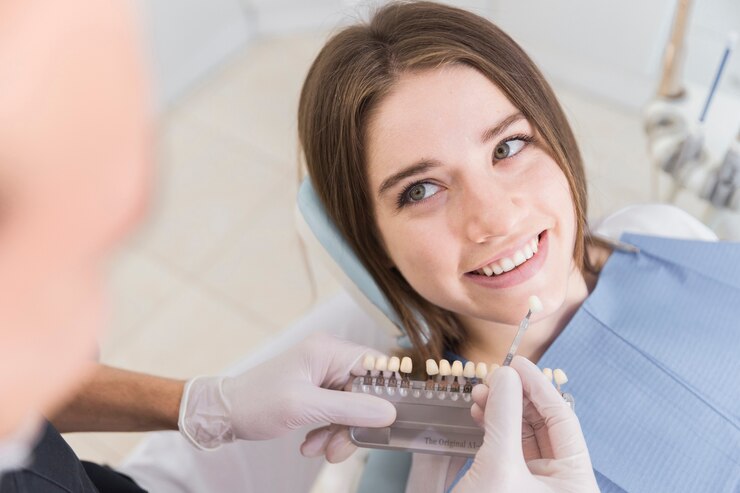
Are you trying to choose between resin veneers and porcelain veneers and feeling unsure which one actually makes sense?
The difference between resin veneers and porcelain veneers comes down to durability, appearance, and how long you want the results to last.
Patients often ask us, “Resin veneers and porcelain, what is the difference, really?” Both are used to improve the look of teeth, but they behave very differently once they’re in your mouth. Without a clear explanation, it’s easy to choose based only on cost and regret it later.
At Clove Dental Sherman Oaks, we spend time helping patients understand not just what veneers look like on day one, but how they perform years down the line. That long-term view is what truly separates resin and porcelain veneers.
Resin Veneers And Porcelain: What Is The Difference?
The primary distinction between resin veneers and porcelain veneers is the strength and durability of the material. Composite resin is used to create resin veneers whereas high-strength ceramic is used to make porcelain veneers.
Both apply to the front side of teeth in order to enhance shape, color or slight misalignment. But there is a great difference in the way they wear, stain, and sustain over the periods. That is why dentists do not consider them as mutually exclusive.
What Are Resin Veneers?
Tooth-colored composite material is used to manufacture resin veneers, which are like fillings or bonding composite material. They are typically carved on the tooth at the appointment.
Resin veneers are also preferred since it is relatively cheaper and occasionally can be done in one visit. They are suitable in small cosmetic jobs, like minor chips or cracks, or in making edges smooth.
Nevertheless, resin is softer in comparison with porcelain. It will be easy to wear down, stain or chip over time and this is particularly on patients who grind their teeth or drink other staining drinks on a regular basis.
What Are Porcelain Veneers?
Porcelain veneers are shells that are created in a dental laboratory and attached to the front of teeth. They are tailor made to suit the natural tooth color and light reflection.
Porcelain is also far more resistant to stain and strength as compared to resin. This renders porcelain veneers as a long term solution to patients who want their cosmetic looks to be conspicuous and enduring.
Because they are lab-made, porcelain veneers usually require more than one visit. They are also more expensive initially but they are known to outlast the resin veneers by a large margin.
Appearance: Which Looks More Natural?
When patients ask about resin veneers and porcelain, what is the difference in appearance is often a key concern.
Porcelain veneers reflect light in a way that closely mimics natural enamel. This gives them a lifelike, polished appearance that holds up over time. Resin veneers can look very good initially, but they may lose shine or discolor as years pass.
For patients who want the most natural and stable look, porcelain veneers are usually the better option.
Durability And Lifespan Differences
Resin veneers can last several years when well taken care of but tend to wear and be stained easily. Their touch-ups or replacement may require earlier.
Porcelain veneers often last much longer because they resist chipping and staining. For patients asking resin veneers and porcelain, what is the difference in lifespan? the answer is simple: porcelain typically lasts longer.
That longevity is why porcelain is often recommended for patients seeking a long-term cosmetic solution.
Cost Differences And What They Mean
Veneers made of resin are also cheaper initially, and so they are well-suited to patients with a limited budget. The porcelain veneers are more expensive due to the lab work, materials and time.
Lower initial price does not necessarily imply value however. Veneers made of resin may have to be repaired or replaced earlier which can be costly in the long run.
When discussing the veneer options, dentists assist patients in the evaluation of short-term versus long-term affordability versus durability.
How Dentists Help You Choose The Right Option
The decision to use resin veneers or porcelain veneers is not all about preference. Dentists take into account the state of teeth, the pressure on the bites, grinding habits, and the purpose of cosmetics.
With our patients at Clove Dental Sherman Oaks, we help them make this decision. It is not only a nicer smile today, but a smile that will be healthy and attractive over the years.
Final Thoughts
So, resin veneers and porcelain, what is the difference?
The resin veneers are affordable and fast whereas the porcelain veneers are strong, free of stains and able to deliver lasting outcomes.
This is because the most appropriate option is determined by your expectations, lifestyle and the permanency of your change. Learning these differences makes a difference and prevents disappointment and results in greater outcomes.